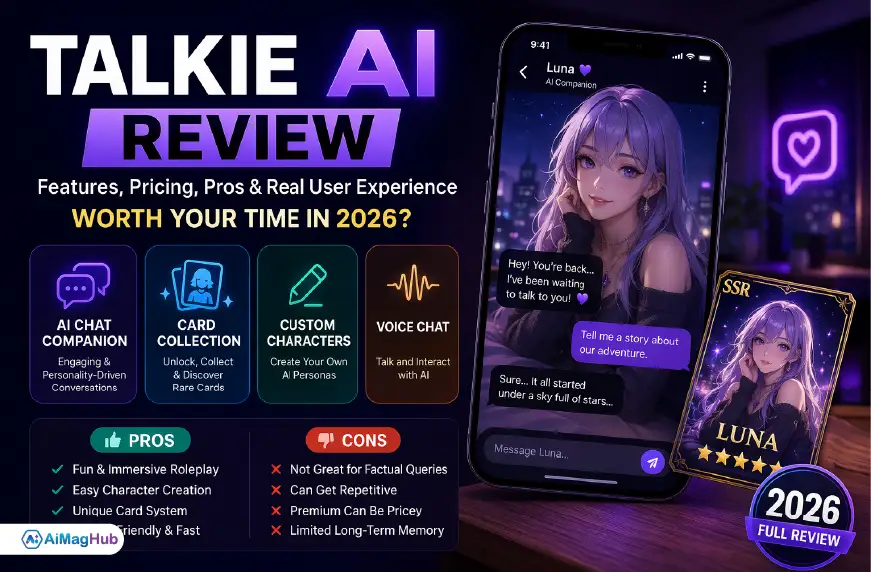
AI chat platforms are evolving fast, and honestly, it’s getting harder to tell which ones are actually useful versus just hype. This Talkie AI Review takes a closer look at one of the more talked-about AI companion apps right now—what it does, how it performs, and whether it’s really worth using in 2026.
If you’ve been exploring AI chatbots for storytelling, roleplay, or just casual conversations, you’ve probably seen Talkie AI pop up. But does it actually deliver a meaningful experience, or is it just another clone in a crowded space? I spent time testing it across different use cases, and here’s what actually stands out (and what doesn’t).
What Is Talkie AI?
Talkie AI is an AI-powered chatbot platform designed mainly for conversational experiences. Unlike traditional AI tools focused on productivity (like writing emails or coding), Talkie AI leans heavily into interactive, personality-driven conversations.
It allows users to:
- Chat with AI characters
- Create custom personas
- Engage in roleplay-style interactions
- Collect and unlock character-based visual cards (more on this later)
The platform has gained traction especially among younger audiences and creative users who want something more engaging than a standard assistant.
Why Talkie AI Matters in 2026
The shift in AI is clear: it’s moving from tools to companions. Platforms like Talkie AI are part of a bigger trend where users don’t just want answers—they want interaction, personality, and immersion.
According to insights published by McKinsey & Company, generative AI adoption in consumer entertainment and communication has surged over the past few years, especially in apps focused on personalization and engagement. That’s exactly where Talkie AI fits in.
Key Features of Talkie AI
1. AI Character Library
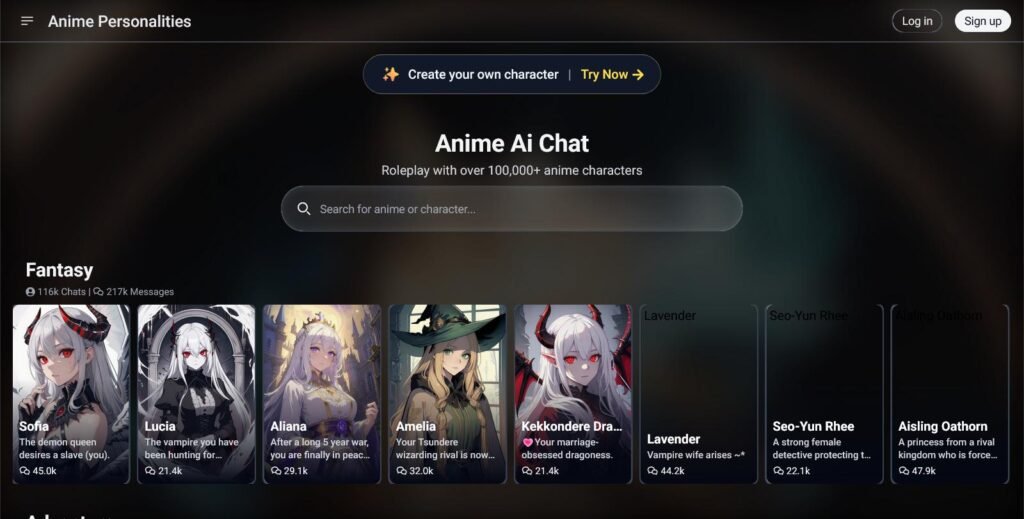
One of the standout features is its library of pre-built characters. These range from fictional personalities to anime-style avatars and even semi-realistic companions.
I tested a few of these, and honestly some conversations felt surprisingly fluid, while others repeated patterns after a while.


2. Custom Character Creation
Users can build their own AI personas by defining:
- Personality traits
- Tone of conversation
- Backstory or role
When I created a sci-fi themed character with a detailed backstory, the bot stayed consistent for around 10–15 messages, then started drifting a bit. That’s typical for most LLM-based systems right now.
3. The Card System (Gacha Mechanics)
This is something many reviews miss—but it’s actually a core part of Talkie AI.
Talkie uses a card collection system, similar to gacha-style apps:
- You unlock character cards through interactions
- Some cards are rare or premium
- Visuals are often high-quality and collectible
This mechanic is not just cosmetic—it drives engagement and monetization. Users keep chatting partly to unlock better cards, which adds a game-like layer to the experience.
4. Voice Interaction (Still Improving)
Talkie AI has started rolling out voice features, though they are not yet as advanced as those from OpenAI or Google.
In my testing, voice responses worked but felt slightly delayed and less natural. It’s usable, but not a standout feature yet.
5. Emotional Intelligence Simulation
Talkie AI attempts to simulate emotions—empathy, humor, curiosity. Sometimes it works well, sometimes it feels scripted.
Still, compared to basic chatbots, it does feel more “alive” which is kind of the whole point.
User Experience: Real Testing Insights
From a usability standpoint, Talkie AI is smooth and mobile-friendly.
What I Noticed During Testing
- Conversations feel engaging at first
- Memory retention works short-term, but fades in longer chats
- Switching between characters is seamless
One interesting thing: when I tried emotional conversations, the AI responded better than when I asked factual or logical questions. That confirms its focus—it’s built for interaction, not accuracy.
What Users Like
- Immersive roleplay experience
- Creative freedom
- Fast responses
What Users Don’t Like
- Repetitive replies after longer chats
- Paywalled features
- Not reliable for factual queries
Performance and AI Quality
Talkie AI likely runs on a mix of proprietary and fine-tuned large language models (LLMs), similar in concept to those developed by Meta and OpenAI.
Strengths
- Natural conversational tone
- Strong personality simulation
- Quick responses
Weaknesses
- Weak long-term memory
- Can break character
- Not ideal for deep or technical topics
Talkie AI vs Other AI Chat Apps
| Feature | Talkie AI | Character AI | ChatGPT |
|---|---|---|---|
| Roleplay Strength | High | Very High | Medium |
| Accuracy | Low | Medium | High |
| Custom Characters | Yes | Yes | Limited |
| Productivity Use | Low | Low | High |
| Voice Chat | Limited | Limited | Advanced |
Talkie AI clearly focuses on entertainment and engagement, not productivity.
Pricing: How Much Does Talkie AI Cost?
Talkie AI follows a freemium model, but here’s a more realistic breakdown based on current app store listings:
Free Version
- Limited chats
- Basic characters
- Slower access during peak times
Talkie+ (Premium)
- Estimated cost: around $9.99/month (can vary slightly by region)
- Faster response priority
- Access to exclusive or rare cards
- Reduced limitations on conversations
This pricing puts it in line with other AI chat apps, but the value depends heavily on how much you care about the card system and extended chats.
Is Talkie AI Safe to Use?
Safety is always a concern, especially with AI that mimics emotional interaction.
According to guidance from Electronic Frontier Foundation, users should avoid sharing sensitive personal data with AI platforms and treat responses cautiously.
Practical Safety Tips
- Don’t share personal or financial info
- Avoid emotional over-dependence
- Monitor usage for younger users
Talkie AI is generally safe, but it’s still an AI—not a human, even if it feels like one sometimes.
Best Use Cases for Talkie AI
1. Creative Writing
Great for brainstorming dialogue and characters.
2. Roleplay & Storytelling
This is where Talkie AI really shines.
3. Casual Chatting
If you just want a companion-like interaction, it works well.
4. Collecting & Gamified Interaction
The card system adds a layer of engagement you don’t get in most AI tools.
Pros and Cons
Pros
| Pros |
|---|
| Engaging, personality-driven chats |
| Strong roleplay capabilities |
| Unique card collection system |
| Easy to use |
Cons
| Cons |
|---|
| Not accurate for factual tasks |
| Repetition over time |
| Premium required for best experience |
| Limited long-term memory |
FAQs
Is Talkie AI safe for teenagers?
Generally yes, but parental guidance is recommended due to emotional interaction features.
How much does Talkie AI Premium cost?
Around $9.99/month, depending on region and platform.
Talkie AI vs Character AI for roleplay?
Character AI is slightly more advanced in dialogue depth, but Talkie AI adds gamification through its card system.
Can Talkie AI replace human interaction?
No, it’s designed for simulation and entertainment—not real relationships.
Final Verdict: Should You Try Talkie AI?
This Talkie AI Review shows that the platform is a solid option if you’re looking for something fun, interactive, and a bit different from traditional AI tools.
It’s not perfect. It repeats itself, loses context sometimes, and it’s not useful for serious tasks. But for roleplay, storytelling, and casual interaction—it actually delivers a pretty engaging experience.
Actionable Takeaway
Start with the free version. Try creating your own character, test a few conversation styles, and see how it feels over multiple sessions—not just one.
If you enjoy the experience and the card system keeps you hooked, then upgrading might make sense.
AI companions are still evolving, and Talkie AI feels like an early but interesting version of where things are going… not fully there yet, but definitely worth exploring.
Visit: Aimaghub