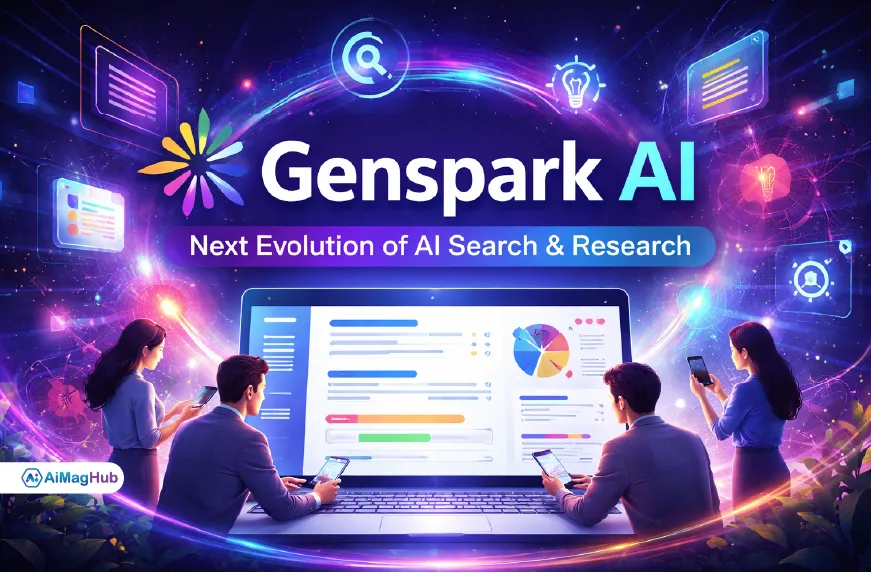
Artificial intelligence is quietly reshaping how we search for information online. Instead of digging through dozens of links, people now expect faster, clearer answers—and ideally, something that actually makes sense at first glance. That’s where Genspark AI comes in.
Genspark AI isn’t just another chatbot or search engine. It’s built to organize information into structured, readable knowledge pages called Sparkpages. These pages combine insights from multiple sources and present them in a way that feels more like a report than a search result.
If you spend time researching, writing, or analyzing information, this shift matters more than it seems at first.
What is Genspark AI?
Genspark AI is an AI-powered research tool that combines real-time search with generative AI. Instead of returning a list of links like traditional search engines, it builds a structured page around your query.
These pages—called Sparkpages—usually include:
- A topic overview
- Key insights
- Organized sections and subtopics
- References to original sources
The goal is simple: reduce the time it takes to go from “searching” to actually understanding something. And in many cases, it does that pretty well.
How Genspark AI Works
Behind the scenes, Genspark AI uses a mix of modern AI technologies. One of the most important is Retrieval-Augmented Generation, which allows the system to pull real-time information from the web and combine it with generated responses.
It also relies on Large Language Models to understand user intent and generate structured outputs.
In practical terms, the process looks like this:
- You enter a query
- The system retrieves relevant data
- It organizes that data into sections
- Then generates a Sparkpage
This approach improves accuracy compared to older AI systems, though it still requires occasional fact-checking. For a deeper technical explanation, the IBM AI glossary is a solid reference point for understanding how these systems work.
Core Features of Genspark AI
Sparkpages: Structured Knowledge on Demand
The defining feature of Genspark AI is the Sparkpage. Instead of showing scattered information, it builds a clean, structured page around your topic.
A Sparkpage typically includes an introduction, categorized sections, summarized insights, and references. It feels closer to a curated research document than a search result, which makes it easier to scan and understand.
AI-Powered Summaries
Genspark AI condenses large volumes of content into short summaries. This is especially useful when you’re exploring a new topic and don’t want to read multiple long articles just to get the basics.
Multi-Source Aggregation
The platform pulls data from different parts of the web and merges it into one cohesive output. This reduces the need to switch between tabs, which honestly saves more time than most people expect.
Interactive Exploration
You can expand sections, refine queries, and explore subtopics directly within the Sparkpage. It’s not static—you can guide the depth of information based on what you need.
Hands-On Example: Testing Genspark AI
To understand how it performs in real-world use, we tested Genspark AI with a simple but practical query:
“AI tools for content marketing in 2026”
Here’s what we noticed:
- A structured Sparkpage was generated in under 10 seconds
- Tools were grouped into categories like writing, automation, and analytics
- Each tool included a short summary
- Key trends were highlighted, including AI-driven personalization
The biggest advantage was clarity. Instead of jumping between articles, everything was organized in one place. That said, some descriptions felt a bit general, so deeper verification is still necessary for important decisions.

Adding a visual like this when publishing would make the experience even more convincing.
Genspark AI vs Traditional Search Engines
Here’s a clear comparison of how Genspark differs from traditional search:
| Feature | Genspark AI | Traditional Search Engines |
|---|---|---|
| Output Format | Structured Sparkpages | List of links |
| Speed | Very fast | Slower due to manual reading |
| User Effort | Low | High |
| Information Clarity | Organized and summarized | Depends on sources |
| Accuracy | Generally good, needs verification | Depends on selected sites |
| Interaction | Dynamic and expandable | Mostly static |
The main difference is simple: Genspark organizes information for you, while traditional search expects you to do the work.
Genspark AI vs Other AI Tools
When compared with ChatGPT, the distinction becomes clearer.
ChatGPT is designed for conversational responses, while Genspark AI focuses on structured research output. Another close competitor is Perplexity AI, which also blends search with AI summaries, but Genspark’s Sparkpage format feels more organized for deeper exploration.
Real-World Use Cases
Genspark AI is useful across different types of users.
Students can use it to quickly understand complex topics without reading multiple sources. It’s especially helpful for building a foundation before diving deeper.
Content creators often use it to generate outlines, identify trends, and structure ideas. It speeds up the early stages of writing, even if the final content still needs a human touch.
Businesses use it for market research and competitor analysis. It helps teams gather insights quickly, which is valuable in fast-moving industries.
Developers can explore frameworks, compare tools, and understand documentation at a high level. It’s not meant for debugging, but it works well for learning.
Pros and Cons of Genspark AI
| Pros | Cons |
|---|---|
| Saves research time | Not always fully accurate |
| Clean, structured output | Can oversimplify complex topics |
| Combines multiple sources | Limited transparency in some cases |
| Great for brainstorming | Still evolving as a platform |
Pricing and Availability
As of early 2026, Genspark AI appears to offer a free access model, with the possibility of premium features being introduced. Like most AI tools, its pricing structure may change, so checking the official website is the best way to stay updated.
Practical Tips for Better Results
To get the most out of Genspark AI, a few simple habits help.
Be specific with your queries. Detailed prompts usually produce better structured results.
Use it as a starting point, not the final answer. It’s great for organizing information, but human judgment still matters.
Always double-check critical facts, especially when dealing with technical, financial, or health-related topics.
Combining it with traditional search can also improve accuracy when deeper validation is needed.
Frequently Asked Questions
Sparkpages are AI-generated knowledge pages that organize information into structured sections. They are the main feature that sets Genspark AI apart from traditional search tools.
It’s reliable for summaries and general research, but it can still make mistakes. Verifying important information is always recommended.
It depends on what you need. Traditional search engines are better for navigation and real-time updates, while Genspark AI is better for structured research and quick understanding.
Not completely. It can significantly speed up the process, but human analysis and critical thinking are still essential.
Final Thoughts
Genspark AI represents a shift in how people interact with information online. Instead of just finding answers, it helps users understand topics faster and with less effort.
It’s not perfect, and sometimes the summaries feel a bit too simplified—but it’s still incredibly useful for research, brainstorming, and organizing ideas.
Key Takeaways
- Genspark AI turns search queries into structured knowledge pages
- It saves time by combining multiple sources into one view
- It works best as a research assistant, not a final authority
- Human verification is still important
If you regularly deal with information overload, Genspark AI is definitely worth trying. It won’t replace everything—but it might replace a big part of how you research online.
Similar Article: Claude Code Channels: The Ultimate Guide to Setup, Security, and Real-World Use (2026)