Artificial intelligence has changed how people write stories, build fictional worlds, and interact with digital characters. One platform gaining significant attention in this space is fictionlab ai. Unlike traditional AI chat tools designed for productivity tasks, FictionLab focuses entirely on creative storytelling, immersive roleplay, and interactive narratives.
In simple terms, FictionLab AI allows users to create characters, build story scenarios, and interact with AI models that continue the narrative dynamically. Instead of generating short chatbot replies, the system behaves more like a collaborative writing partner that evolves the story as you go.
Writers, gamers, and role-playing communities are increasingly using the platform because it offers deeper narrative logic, powerful memory tools, and fewer creative restrictions compared with many mainstream AI chat services. You can explore the platform directly through the official FictionLab AI website, where users can create characters and start interactive stories in minutes.
What Is FictionLab AI?
FictionLab AI is an interactive storytelling platform powered by advanced large language models. The system allows users to design fictional characters, define their personalities, and place them inside dynamic story environments where AI responses continue the narrative in real time.
According to documentation available through the FictionLab documentation portal, users can create characters, scenarios, and world-building elements that guide how the AI behaves during conversations.
Instead of asking questions like a normal chatbot, users participate in evolving stories where dialogue, actions, and events unfold naturally through interaction.
Why FictionLab AI Is Becoming Popular
The popularity of fictionlab ai is closely tied to the growing demand for creative AI tools. Many traditional AI chat platforms prioritize speed and factual answers, but storytelling requires something different: memory, consistency, and character personality.
FictionLab stands out because it focuses on long-form narrative experiences rather than quick chatbot interactions. AI directories such as the AI Tools Bee listing for FictionLab categorize the platform as a dedicated storytelling engine rather than a general AI assistant.
Another major factor is the platform’s use of large AI models that provide stronger narrative reasoning compared with smaller models used by some competitors.
The AI Engines Behind FictionLab AI
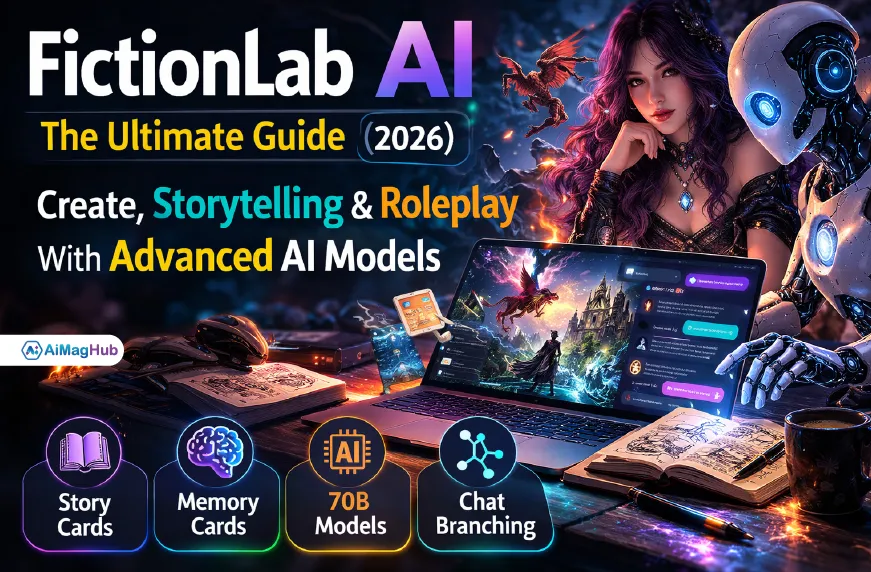
Casual reviews often treat FictionLab as a single AI model, but the platform actually includes multiple engines optimized for different storytelling styles. These engines are commonly discussed in the community surrounding the platform, which has grown through documentation and developer updates shared by FictionLab’s creator, Micotsu.
| Model Engine | Purpose | Strengths | Weaknesses |
|---|---|---|---|
| Oracle V3 (70B) | Flagship storytelling model | Strong narrative logic and memory | Occasional “omniscience” or glitch outputs |
| Ophelia | Creative storytelling model | Rich descriptions and emotional dialogue | Sometimes overly descriptive |
| Wraithmind | Fast conversation engine | Quick responses and mobile-friendly speed | Less narrative depth than Oracle |
Oracle V3: The 70B Powerhouse
The most powerful model currently available in fictionlab ai is Oracle V3. It runs on a massive 70-billion-parameter architecture believed to be derived from modern Llama-based systems.
Large models like this are capable of maintaining stronger narrative logic, remembering character motivations, and generating complex dialogue across long conversations. However, because of its size, Oracle V3 occasionally produces unusual responses known in the community as the “China glitch” or “omniscience bug”.
These issues are rare and usually easy to fix, but understanding them is part of mastering the platform.
Ophelia: The Narrative Model
Ophelia is often described by users as the “novelist model.” It emphasizes emotional storytelling, descriptive scenes, and character-driven dialogue.
If your goal is immersive fantasy storytelling or romantic narratives that feel like reading a novel, Ophelia tends to perform extremely well.
Wraithmind: The Speed Engine
Wraithmind focuses on response speed. Many users prefer it for rapid dialogue scenes or when using the mobile version of FictionLab where quick responses are more convenient.
Although it is faster than Oracle V3, it sacrifices some narrative depth.
Understanding FictionLab’s Memory System
One of the most powerful aspects of fictionlab ai is its hybrid memory architecture. Many reviews incorrectly group all memory features together, but the platform actually uses two different systems that serve separate purposes: Memory Cards and Story Cards.
Understanding how these two tools work together is essential if you want the AI to maintain consistent world-building and narrative logic across long conversations.
Memory Cards (Automatic Story Recaps)
Memory Cards are automatically generated summaries created by the system approximately every 30–50 messages. These summaries capture key plot developments, character relationships, and important events that have occurred in the story.
Think of Memory Cards as a recap system. Instead of forcing the AI to reread thousands of previous messages, the platform condenses important events into structured summaries so the model can quickly remember what has already happened.
A useful strategy recommended by experienced users is to pin important Memory Cards, especially the ones that describe your character’s origin story or the main quest. Pinning prevents those summaries from being replaced by newer ones.
Story Cards (The Lorebook System)
While Memory Cards summarize events automatically, Story Cards are manual world-building entries created by the user. These function similarly to lorebooks used in advanced roleplay tools.
Story Cards are triggered by keywords. When the AI encounters a specific word or phrase in the conversation, it loads the related Story Card and injects the information into the model’s context.
For example, if your story includes a city called Eldoria, you can create a Story Card triggered by the keyword “Eldoria.” Whenever that word appears in dialogue or narration, the AI loads the card and remembers the city’s details.
This system allows FictionLab to support extremely large fictional worlds without overwhelming the AI’s context window.
💡 Admin Pro-Tip:
One of the most effective ways to trigger a Story Card consistently in fictionlab ai is to include the trigger keyword directly inside your Scenario Header.
For example, if your story takes place in a city called Novacore, add a header like this at the top of your prompt:
[Location: Novacore]
Because the keyword appears in the active prompt, the AI keeps the Novacore Story Card loaded in its immediate context. This helps maintain narrative consistency and ensures the AI remembers important world-building details throughout the story.
When used correctly, the combination of automatic Memory Cards and manual Story Cards creates a powerful hybrid memory system. Memory Cards keep track of what has happened, while Story Cards define the rules and lore of the world itself.
Chat Branching: Exploring Alternate Timelines
Another powerful feature introduced in recent updates is Chat Branching.
This tool allows users to go back to any previous message and create a new timeline from that point. Instead of deleting parts of the story, you can explore alternative outcomes.
For example, if a character makes a major decision, you can branch the conversation and see how the story unfolds if they made a different choice.
How to Use FictionLab AI
Step 1: Create an Account
Sign up on the official platform and access the character creation tools.
Step 2: Build a Character
Define personality traits, motivations, dialogue style, and background.
Step 3: Create a Scenario
Choose a story setting such as fantasy, science fiction, or mystery.
Step 4: Start the Story
Interact with the AI and guide the narrative through dialogue and actions.
Step 5: Expand the Narrative
Add characters, plot twists, and story branches as the conversation continues.
FictionLab AI vs Other Roleplay Platforms
| Feature | FictionLab AI (2026) | Character.AI | Janitor AI |
|---|---|---|---|
| Model Transparency | High (Oracle, Ophelia, Wraithmind) | Low | Medium |
| Model Size | 70B Parameters | Proprietary | Varies |
| Memory System | Hybrid (Memory Cards + Story Cards) | Basic conversation memory | Manual lorebooks |
| Content Filters | Unfiltered | Strict filters | Mostly unfiltered |
| Narrative Strength | Excellent for long-form storytelling | Good for casual chat | Strong roleplay flexibility |
Troubleshooting Common AI Glitches
Large AI models sometimes produce unusual outputs. FictionLab users have developed several community-tested techniques for fixing these issues.
Use the /Rewind Command
Step back a few messages if the AI begins drifting away from the narrative.
Use Out-of-Character Instructions
Example: [OOC: AI must never speak or act for the user’s character.]
Force Memory Regeneration
The command /memory-cards can trigger new summaries and refresh the AI’s understanding of the story.
Tips for Getting Better Results
- Write detailed character descriptions
- Create Story Cards for locations and lore
- Use Custom LLM Instructions to control behavior
- Guide the story actively rather than waiting for the AI
Starter Scenarios to Try
If you want to test fictionlab ai quickly, these beginner scenarios work well:
- Fantasy Tavern: Travelers meet before starting a dangerous quest.
- Space Detective: Investigate a crime on a futuristic station.
- Mystery Academy: Students discover hidden magical abilities.
Frequently Asked Questions
Yes, the platform offers a free tier with access to powerful models. Premium plans provide additional usage and features.
Yes. Many writers use it for brainstorming dialogue, exploring character relationships, and testing story ideas.
Not really. The platform works best as a creative partner rather than a replacement for human writers.
Conclusion
FictionLab AI represents a new generation of storytelling platforms where artificial intelligence becomes part of the creative process. With powerful models like Oracle V3, hybrid memory systems using Story Cards and Memory Cards, and advanced features such as chat branching, the platform offers one of the most flexible environments for interactive fiction.
For writers, role-players, and world-builders, fictionlab ai is more than just a chatbot. It is a collaborative storytelling engine capable of evolving narratives in ways that traditional writing tools cannot.
The best way to understand its potential is simple: create a character, build a scenario, and see where the story leads.
Visit For More: AiMagHub.com