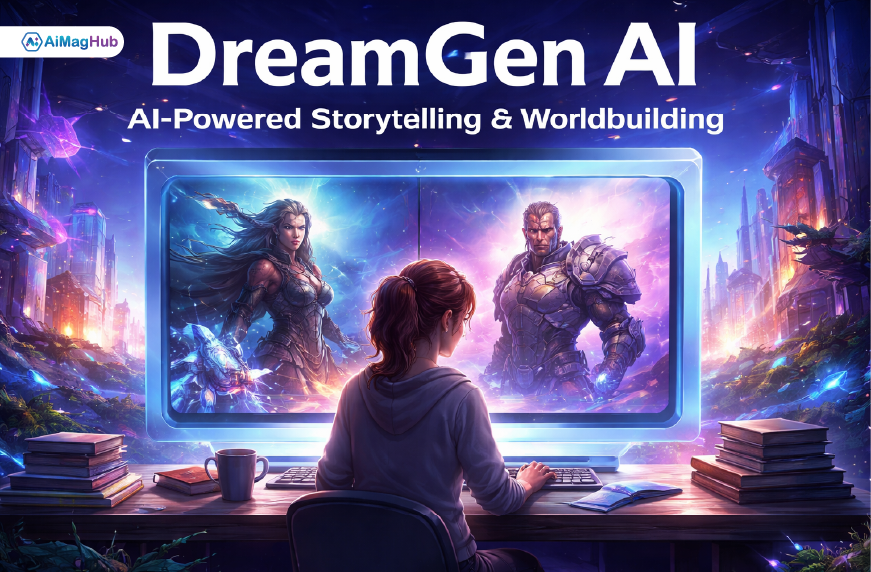
If you’ve explored AI creative tools lately, chances are you’ve come across DreamGen AI. But it’s not just another chatbot or text generator—it’s immersive, experimental, and personal in a way most AI tools aren’t.
At its core, DreamGen AI is designed for interactive storytelling. Not the stiff, template-driven kind, but narrative experiences driven by characters, roleplay, and long-form creativity. It’s perfect for writers, gamers, and anyone who enjoys world-building. In a digital world saturated with AI tools, DreamGen AI shifts the experience from utility to exploration.
What Is DreamGen AI?
DreamGen AI is an advanced platform that enables users to create dynamic stories, roleplay scenarios, and fictional characters in real time. Unlike traditional AI writing tools, it generates interactive narratives that evolve with your inputs.
Think of it as a hybrid of:
- Creative writing assistant
- Roleplay engine
- Character simulator
Instead of asking it to “write a story,” you can step into the story, guide it, and interact with characters as if they’re alive.
Why DreamGen AI Is Gaining Popularity
- Feels Like a World, Not a Tool: Unlike most AI tools that respond once, DreamGen maintains narrative momentum, evolving stories over time.
- Strong Focus on Roleplay and Characters: Users can define personalities, traits, and simulate natural dialogue.
- Freedom Compared to Other Platforms: Less restricted than some AI tools, giving writers more creative liberty.
Key Features of DreamGen AI
Interactive Storytelling Engine
Start with a simple prompt, and the story evolves based on your interactions.
Prompt: "A detective wakes up in a city where no one remembers him."
DreamGen AI Response: "The streets are silent. Shadows whisper your name, and you realize memory is your curse..."
Advanced Character Creation
Define characters with:
- Personality traits
- Backstory
- Behavior patterns
- Dialogue style
This ensures characters feel consistent and believable, not random or generic.
Long-Form Memory Support
DreamGen AI maintains story continuity, character relationships, and plot progression better than most lightweight AI generators.
Multiple Story Modes
Users can explore formats such as:
- Roleplay scenarios
- Narrative writing
- Dialogue-heavy interactions
- Experimental storytelling
How DreamGen AI Works: Step-by-Step
- Choose a Mode: Story, Roleplay, or Custom scenario.
- Define the Context: Set characters, setting, tone (dark, funny, romantic, etc.).
- Start Interacting: Guide the narrative and watch AI respond in real time.
- Refine and Expand: Tweak outputs, steer stories, or restart sections if needed.
Real-World Use Cases
- Fiction Writers: Overcome writer’s block, brainstorm plot ideas, develop characters.
- Roleplay Communities: Fantasy, sci-fi, or character-driven storytelling—AI adapts to genres.
- Game Developers: Write dialogue, test NPC personalities, prototype narratives.
- Casual Creativity: Explore alternate worlds, simulate conversations, or try “what-if” scenarios.
Pros and Cons
| Pros | Cons |
|---|---|
| Highly interactive storytelling Strong character consistency Flexible and creative freedom Supports long-form narratives Great for roleplay and immersive writing | Can feel overwhelming for beginners Output quality depends on input Occasional inconsistencies in long sessions Not ideal for factual or research-based writing |
DreamGen AI vs Other AI Writing Tools
| Feature | DreamGen AI | Traditional AI Tools |
|---|---|---|
| Interactivity | High | Low |
| Character Depth | Strong | Basic |
| Story Continuity | Moderate to Strong | Weak |
| Use Case | Creative writing & roleplay | General writing |
| Flexibility | Very High | Limited |
Tips to Get the Best Results
- Be Specific: Instead of “Write a story,” try “Write a dark fantasy story about a cursed knight who slowly loses his memory.”
- Guide the AI Actively: Interact, steer, and challenge the narrative.
- Build Strong Characters: Detailed characters improve output quality.
- Experiment with Styles: Dramatic, humorous, suspenseful—observe AI adaptation.
FAQs
Offers a free tier; advanced features may require a subscription.
Best for creative storytelling rather than formal writing.
No—it’s a creative partner, not a replacement.
Generally yes; avoid sharing sensitive info.
Final Thoughts
DreamGen AI isn’t just another AI writing tool—it’s a creative playground. Writers, roleplayers, and world-builders will find it worth exploring. While it requires guidance and patience, the interactivity and character depth are exceptional.
Actionable takeaways:
- Use DreamGen AI for interactive storytelling, not just text generation.
- Craft detailed prompts for better results.
- Treat it as a creative partner, not a one-click solution.
- Experiment with different genres to unlock its full potential.
Example prompt-and-response interaction:
Prompt: "A rogue wizard opens a portal to a forbidden world."
AI Response: "The air shimmers, and unseen voices beckon. Magic hums beneath your fingertips as a new adventure begins..."
VISIT FOR SIMILAR ARTICLE: ThotChat AI: What Happened, Shutdown Details, Refunds & Best Alternatives (2026)