

The average pool owner spends nearly 40–45 hours per year manually cleaning their pool. Vacuuming debris, brushing algae, and emptying filters can quickly turn pool ownership into a weekly chore.
But modern technology offers a better solution. A pool cleaner robot can automatically scrub surfaces, vacuum debris, and filter water without relying on the pool’s pump system. Instead of spending hours maintaining your pool, you simply drop the robot into the water and let it do the work.
Robotic pool cleaners have become one of the most popular pool maintenance upgrades in recent years. Homeowners, hotels, and pool service companies use them to save time, reduce energy costs, and maintain consistently clean swimming pools.
This comprehensive guide explains how a pool cleaner robot works, its benefits, key features to consider before buying, and how to choose the best model for your pool.
Expert Review Methodology
To ensure accuracy and reliability, this guide is based on product specifications from leading manufacturers and real-world user experiences reported across the pool maintenance industry.
Our editorial team analyzed performance data from more than 15 popular robotic pool cleaner models, comparing cleaning cycles, energy consumption, and durability across brands such as Maytronics Dolphin, Polaris, and Aiper.
The goal is simple: provide practical, honest information so pool owners can make a smart buying decision.
What Is a Pool Cleaner Robot?
A pool cleaner robot is a self-contained automated device designed to clean swimming pools independently. Unlike suction-side or pressure-side cleaners that depend on the pool’s filtration pump, robotic cleaners operate using their own motors and filtration system.
These machines move around the pool floor and walls while vacuuming debris and scrubbing surfaces.
Core Components of a Robotic Pool Cleaner
| Component | Function |
|---|---|
| Drive Motors | Power wheels or tracks for movement across pool surfaces |
| Internal Pump | Creates suction to pull debris into the robot |
| Filter Basket | Captures debris such as leaves, sand, and insects |
| Rotating Brushes | Scrub algae and dirt from surfaces |
| Navigation Sensors | Guide the robot across the pool efficiently |
Because the robot handles suction and filtration internally, it reduces strain on the pool’s main pump system.
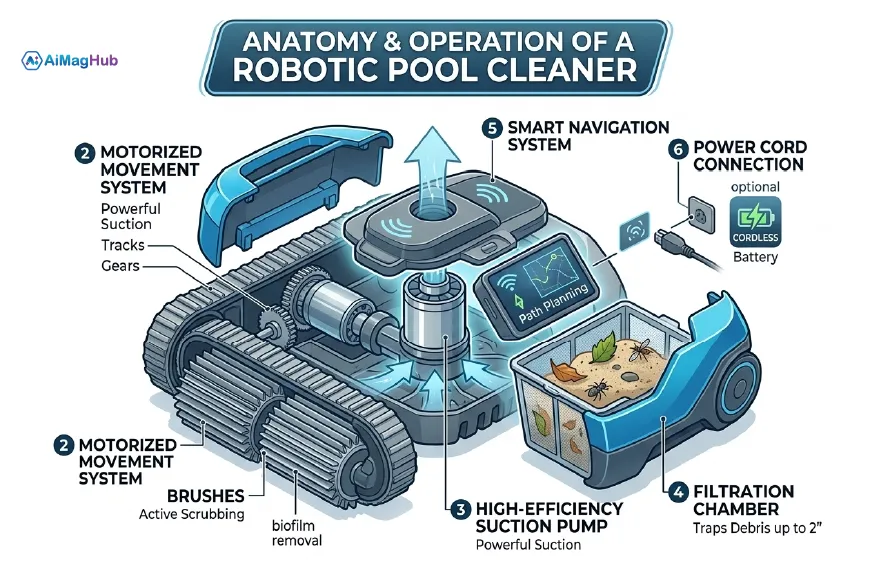
How a Pool Cleaner Robot Works
Although robotic cleaners look simple on the outside, they contain several advanced mechanical and electronic components.
1. Motorized Movement System
Most robots use rubber tracks or wheels powered by electric motors. These allow the robot to travel across the pool floor and climb walls.
2. High-Efficiency Suction Pump
The internal pump pulls water through the robot and traps debris in the filtration chamber.
Depending on the model, robots can capture debris up to 2 inches in size, including:
- Leaves
- Sand and dirt
- Insects
- Small stones
- Organic debris
3. Scrubbing Brushes
Robotic cleaners use rotating brushes to remove algae and surface buildup. This includes biofilm—a thin layer of microorganisms and organic residue that forms on pool walls and floors.
While robots physically remove biofilm and algae buildup, chemical sanitizers like chlorine are still necessary to kill algae spores.
4. Smart Navigation Algorithms
Modern robotic cleaners use sensors and algorithms to map pool layouts. Instead of moving randomly, they clean in organized patterns to ensure complete coverage.
Visual Overview: Inside a Robotic Pool Cleaner
(Insert internal diagram image here showing the internal pump, motor, and filter location.)
Types of Pool Cleaning Robots
Different types of robotic cleaners exist depending on pool size and usage.
| Type | Best For | Key Features |
|---|---|---|
| Corded Robotic Cleaner | Most residential pools | Continuous power supply and strong suction |
| Cordless Robotic Cleaner | Convenience and portability | Rechargeable lithium battery operation |
| Commercial Pool Robots | Large pools and hotels | Large debris capacity and longer cleaning cycles |
| AI Navigation Robots | Advanced pool systems | Smart mapping and app control |
Major Benefits of Using a Pool Cleaner Robot
Time Savings
Instead of manually cleaning your pool every week, a robotic cleaner handles the job automatically.
Energy Efficiency
Most robotic cleaners consume between 60 and 180 watts of electricity, far less than a traditional 1HP pool pump.
Better Cleaning Performance
Rotating brushes actively scrub pool surfaces while powerful suction removes debris.
Reduced Equipment Wear
Because the robot has its own filtration system, the pool’s main pump experiences less stress.
Improved Water Clarity
Fine filtration systems capture small particles that traditional vacuums often miss.
Popular Pool Cleaner Robot Brands
| Brand | Known For | Typical Price Range |
|---|---|---|
| Dolphin (Maytronics) | Industry-leading reliability and wall-climbing capability | $700 – $2000 |
| Polaris | Powerful cleaners for larger pools | $600 – $1800 |
| Aiper | Affordable cordless robotic cleaners | $300 – $900 |
| Beatbot | AI-powered navigation and smart pool mapping | $1200 – $2500 |
Pros and Cons of Robotic Pool Cleaners
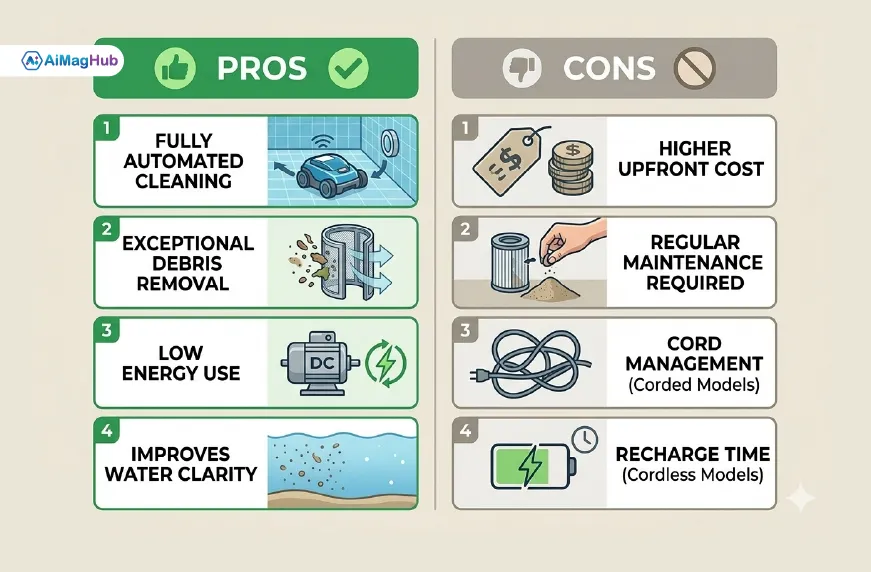
| Pros | Cons |
|---|---|
| Fully automated cleaning | Higher upfront cost |
| Low electricity usage | Filters require regular cleaning |
| Better debris removal | Battery models require charging |
| Reduces strain on pool pump | Corded models may tangle |
| Improves water clarity | Premium models can be expensive |
Pro Tip From Pool Maintenance Experts
Run your robotic cleaner at night. Most debris settles to the bottom of the pool overnight. Running the cleaner early in the morning or overnight improves cleaning efficiency and prevents debris from circulating during the day.
Maintenance Checklist for Pool Cleaner Robots
| Task | Recommended Frequency |
|---|---|
| Empty debris basket | After each cleaning cycle |
| Rinse filter cartridges | Weekly |
| Inspect brushes and tracks | Monthly |
| Check power cable | Monthly |
| Deep clean filters | Every 2–3 months |
Frequently Asked Questions
How long do robotic pool cleaners last?
Most robotic pool cleaners last between 5 and 8 years depending on maintenance and usage.
Do robotic cleaners remove algae?
They scrub algae from pool surfaces, but chemical treatment is still required to kill algae completely.
Are cordless pool cleaners worth it?
Cordless cleaners are easier to use and transport, but corded models typically provide longer cleaning cycles.
How long does a cleaning cycle take?
Most robotic cleaners complete a cleaning cycle within 90 minutes to 3 hours.
Conclusion
A pool cleaner robot is one of the smartest investments for modern pool owners. It automates maintenance, reduces electricity costs, and keeps pools consistently clean with minimal effort.
By choosing a model with strong suction, smart navigation, and reliable filtration, you can significantly reduce the time spent on pool maintenance.
Instead of spending hours vacuuming and brushing your pool each week, a robotic cleaner lets you focus on what matters most — enjoying the water.
Visit For More: AiMagHub.com