
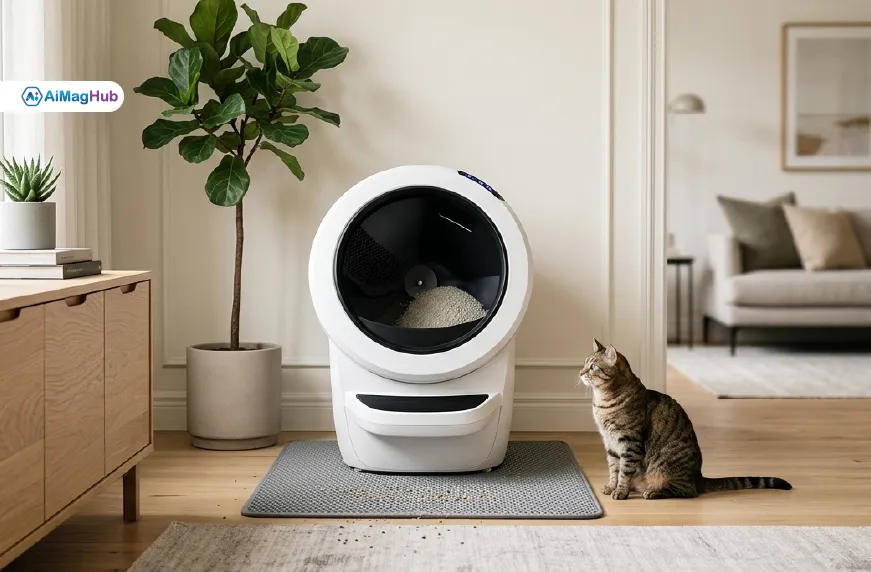
Cleaning a cat’s litter box is one of those chores nobody enjoys—but every cat owner deals with daily. That’s exactly why the litter robot has become one of the most talked-about pet tech upgrades in recent years. It promises to eliminate scooping, reduce odor, and basically automate the dirtiest part of cat ownership.
But here’s the real question: does it actually live up to the hype—or is it just an expensive gadget?
After analyzing real user experiences, product specs, and industry data, this guide breaks it all down in a practical, no-nonsense way.
Quick Authority Note (Why This Guide Matters)
After reviewing multiple smart pet devices and digging through hundreds of user reviews across forums, retailer pages, and tech publications, one thing becomes clear: self-cleaning litter boxes are not just a trend—they’re becoming standard in modern pet care.
According to the American Pet Products Association, pet tech adoption continues to rise year-over-year, especially in convenience-driven categories like automated feeders and litter systems.
What Is a Litter Robot?
A litter robot is a self-cleaning litter box that automatically separates waste from clean litter after your cat uses it.
The most well-known models are made by Whisker, particularly the Litter-Robot 4.
What makes it different?
- It detects when your cat enters and exits
- Waits a few minutes for clumping
- Automatically sifts waste into a sealed drawer
- Reduces odor and daily maintenance
Instead of scooping every day, you typically just empty the waste drawer once every few days.
How Does a Litter Robot Work?
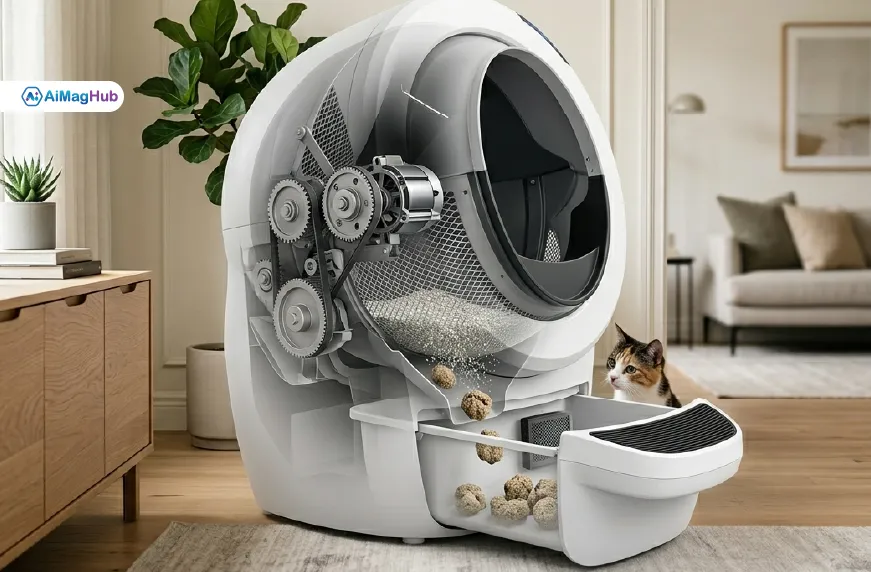
The process is simple but engineered with smart sensors and timing.
Step-by-step breakdown:
- Cat enters → sensors activate
Newer models use advanced detection systems like OmniSense™ (a mix of weight + laser sensors). - Cat exits → timer starts
You can usually set delays at 3, 7, or 15 minutes (based on clumping preference). - Cleaning cycle begins
The globe rotates, separating clumps from clean litter. - Waste is sealed away
Clumps drop into a carbon-filtered drawer that helps control odor. - System resets automatically
This continuous cycle keeps the litter consistently clean—something most cats actually prefer.
Real User Experiences (What People Actually Say)
Instead of relying on marketing claims, here’s what real users report across platforms like Reddit, Trustpilot, and retail reviews:
👍 Positive Experiences
“I have 3 cats and this completely changed my routine. No more daily scooping.”
“The smell reduction is noticeable within days. My apartment feels cleaner.”
“It paid off in convenience within a few months honestly.”
👎 Common Complaints
“The price is steep upfront.”
“One of my cats took about 2 weeks to fully trust it.”
“You still need to deep clean it occasionally—it’s not zero maintenance.”
Key Insight:
Most negative feedback isn’t about performance—it’s about expectations. People expecting “zero effort forever” tend to be disappointed. Those expecting reduced effort are usually very satisfied.
Litter Robot Price in 2026 (Real Numbers)
Let’s address the biggest concern—cost.
- Litter-Robot 4: typically ranges from $649 to $699
- Accessories (liners, filters): ~$20–$50/month depending on usage
Compared to a $20–$50 traditional litter box, that’s a significant jump.
But here’s the trade-off:
You’re paying for:
- Time saved daily
- Better hygiene
- Less odor management stress
For many multi-cat households, this becomes more of a quality-of-life investment rather than a luxury.
Real-World Case Example
Case: 2-Cat Household (Apartment Living)
- Before: Scooping twice daily, noticeable odor issues
- After switching to Litter Robot:
- Cleaning reduced to twice per week
- Odor significantly reduced
- Cats showed preference for cleaner box
This pattern repeats across many user reports—especially in small living spaces.
Pros and Cons (Honest Breakdown)
✅ Pros
- Eliminates daily scooping
- Strong odor control with sealed waste drawer
- Ideal for multiple cats
- Smart app tracking (usage, waste levels)
- Consistently clean environment for cats
❌ Cons
- High upfront price ($650+)
- Requires power source
- Bulky footprint (~22” x 27”)
- Some cats need transition time
- Not completely maintenance-free
Important Accuracy Update (Kittens & Weight Limits)
Earlier guides often overestimate the required weight.
Here’s the correct info based on manufacturer guidelines:
- Minimum weight for automatic mode: ~3 lbs (1.4 kg)
- Litter-Robot 3 recommended: ~5 lbs (2.2 kg)
This is important—using it too early can prevent proper sensor detection.
Litter Robot vs Traditional Litter Box
| Feature | Litter Robot | Traditional Box |
|---|---|---|
| Cleaning | Automatic | Manual |
| Odor Control | High | Moderate |
| Daily Effort | Minimal | High |
| Cost | $650+ upfront | Low upfront |
| Smart Features | Yes | No |
The difference isn’t subtle—it’s a shift from manual to automated care.
Tips Before You Buy
1. Measure Your Space
The unit is larger than most people expect. Make sure you have room.
2. Transition Gradually
Keep the old litter box nearby for at least a week.
3. Use Clumping Clay Litter
This is critical—non-clumping litter won’t work properly.
4. Expect a Learning Curve
Some cats adapt instantly, others take 1–2 weeks.
5. Budget Beyond the Device
Include:
- Waste drawer liners
- Filters
- Occasional deep cleaning supplies
FAQs
Is a litter robot safe?
Yes. Modern units include multiple safety sensors that stop operation if a cat re-enters.
How often do you empty it?
– 1 cat: ~7 days
– 2–3 cats: every 2–3 days
Does it completely eliminate smell?
No—but it dramatically reduces it compared to traditional boxes.
Is it worth it for one cat?
It depends. For single-cat homes, it’s more about convenience than necessity.
Can nervous cats use it?
Yes, but slower introduction is key. Some may need manual mode first.
Who Should Actually Buy One?
The litter robot makes the most sense for:
- Multi-cat households
- Apartment dwellers (odor control matters more)
- Busy professionals
- Frequent travelers
Less ideal for:
- Budget-conscious buyers
- Owners of highly anxious cats
- Minimalist setups
Final Verdict: Is the Litter Robot Worth It?
The litter robot delivers on its core promise—it reduces one of the most annoying daily chores in pet ownership.
It’s not cheap, and it’s not completely hands-off. But compared to traditional litter boxes, it offers a clear upgrade in convenience, cleanliness, and consistency.
Bottom line:
- If you value time and convenience → worth it
- If budget is your main concern → maybe skip it
Actionable takeaway:
If you’re considering buying one, start with:
- Measuring your space
- Checking your cat’s behavior
- Planning a proper transition period
Because once it works for your household… going back to scooping feels like a downgrade.
Related Article : Best Robotic Cats 2026: Realistic AI Companions for Seniors, Kids & Busy Lifestyles